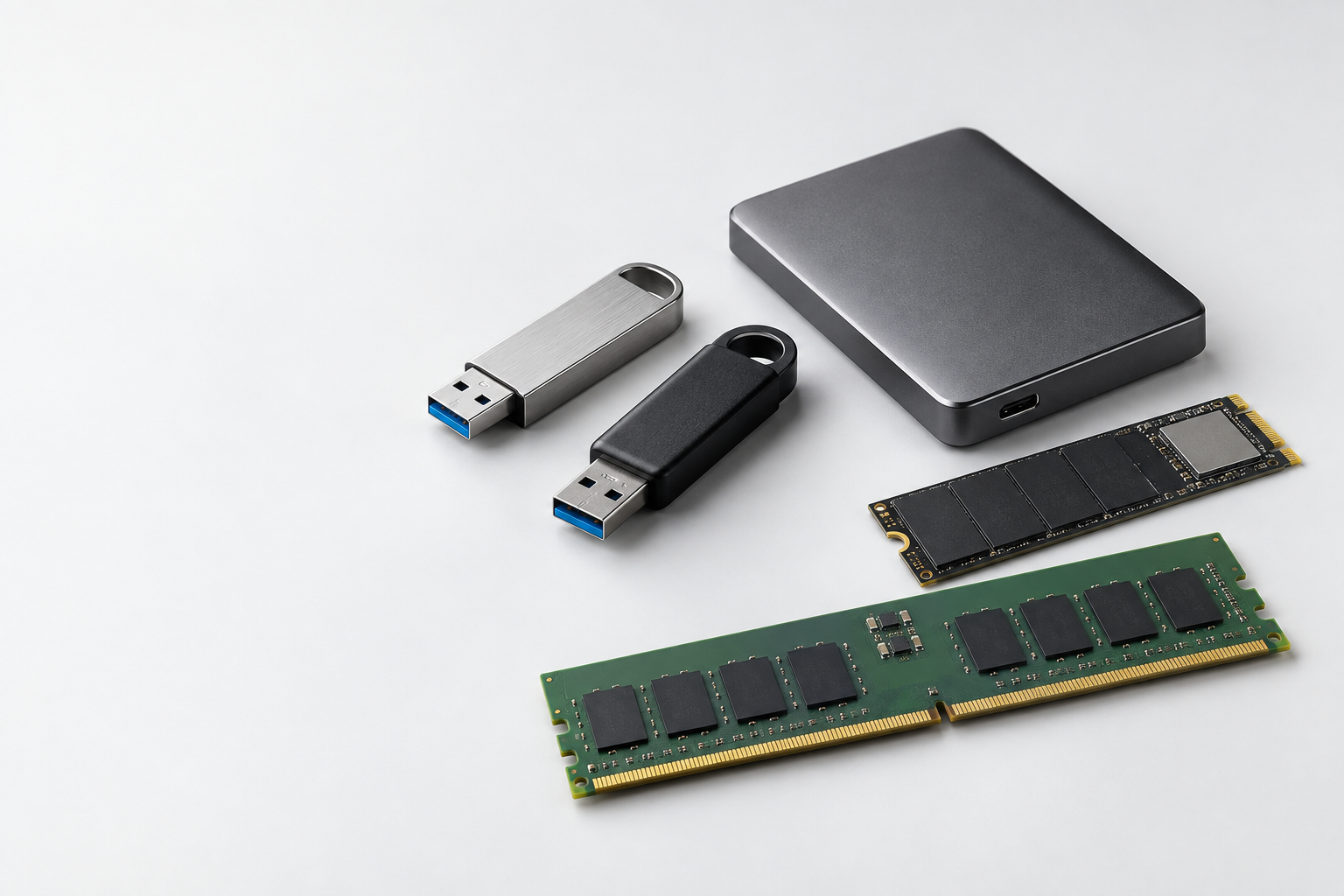
Quick answer: Choose a USB flash drive when portability, cost control, a compact giveaway format or a simple transfer task is central to the project. Choose a portable SSD when the buyer needs higher capacity, faster sustained transfers or a more premium physical product for repeat use.
What is the practical difference between a USB flash drive and a portable SSD?
A USB flash drive is a compact removable device that is easy to distribute and brand. A portable SSD is an external solid-state drive designed for more demanding storage and transfer use. Both are flash-based, but they differ in physical format, likely capacity expectations, interfaces and perceived value to the end user.
In a product review, StorFlux starts with the customer requirement rather than the device name. An event campaign, a retail accessory, a creative-workflow backup drive and a system-integration project each call for a different balance of format, capacity, finish and inspection requirements.
USB flash drive vs portable SSD: B2B comparison
| Selection point | USB flash drive | Portable SSD |
|---|---|---|
| Typical program fit | Promotional distribution, events, daily handoff | Backup, creative files, premium retail or professional use |
| Physical format | Small, pocketable, easy to include in a presentation box | Larger enclosure, designed for a substantial storage product feel |
| Branding approach | Logo methods and body finishes can be selected around campaign needs | Enclosure finish, accent details and retail packaging help convey a premium program |
| Requirement to clarify | Interface, capacity, finish and expected user device compatibility | Capacity, interface, sustained use scenario, enclosure and packaging |
How to select the right format for a B2B storage program
1. Define what files users will move
Start with file size and transfer frequency. A simple handoff of documents or campaign media creates a different brief from repeated transfers of high-resolution content, application files or project backups.
2. Check the end-user interface
Device compatibility should be decided early. USB-A, USB-C and dual-interface requirements influence both the product format and the way users experience it after delivery.
3. Treat branding and packaging as part of the product
For a branded program, the product body, logo method, finish, insert card and carton should work together. A sample review is the practical stage to confirm that the physical presentation reflects the intended market position.
4. Confirm inspection points before the order is released
Functional, appearance and packing checks should relate to the approved requirement. See our quality and inspection approach for the review stages that can be discussed for each project.
When a portable SSD is the better commercial choice
A portable SSD is often more appropriate when the end user expects a substantial storage product rather than a compact giveaway. It can suit creative workflows, mobile backup routines and premium accessory lines where enclosure quality and transfer experience carry meaningful weight in the purchase decision.
Frequently asked questions
Can a USB flash drive and portable SSD use the same branding style?+
They can share visual principles, but the practical branding method depends on the enclosure material, available print area and the intended packaging. Review the physical product sample before final approval.
What should I include in a quote request?+
Include product family, approximate capacity, interface, estimated quantity, destination market, branding needs and delivery window. This creates a practical base for discussing options.
Can StorFlux support product samples?+
Samples are the appropriate way to confirm form factor, finish and key product requirements before production scheduling. Send your requirements through our contact page.
Choose the device that fits the workflow
USB flash drives and portable SSDs solve different storage needs. By defining the user workflow, interface, capacity range, brand presentation and inspection points early, B2B buyers can select a format that works commercially and operationally.
Discuss Your Storage Program ↗